
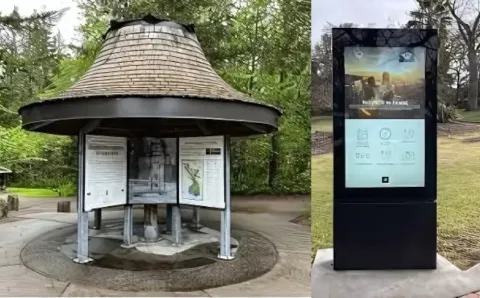
Outdoor digital kiosks are a smart investment for parks and public spaces. They help attract more visitors, boost satisfaction, and cut staffing costs. With features like real-time updates, interactive maps, and local info, these kiosks make it easy for people to explore and enjoy their surroundings.
If you’re thinking about upgrading your space with digital kiosks, this guide will walk you through everything you need to know before making a decision.
What Is an Outdoor Digital Kiosk?

Outdoor digital kiosks are tough, all-in-one terminals that work in any weather. You’ll often see them in parks and public areas. They come with bright touchscreens and internet access, making it easy to share real-time info, maps, and updates with visitors.
How Digital Kiosks Differ from Traditional Signage
Traditional signs are static. They require manual updates and only serve one purpose at a time.
Digital kiosks, on the other hand, are:
- Interactive and easy to update remotely.
- Capable of displaying multiple types of content (maps, alerts, events).
- Accessible to a broader audience with multi-language and ADA features.
- They turn information points into self-service hubs for visitors.
Use Cases in Public Parks
Park managers use digital kiosks to:
- Guide visitors with interactive trail maps.
- Share updates on weather, closures, and safety alerts.
- Promote events, local wildlife, and educational content.
- Reduce pressure on staff by automating routine queries.
These kiosks help parks run smoother while improving the visitor experience.
Key Types of Outdoor Kiosks Used in Parks

Modern parks use several types of digital kiosks to meet different visitor and operational needs.
Here’s a breakdown of the most common types and how each type fulfills specific needs.
Digital Map Kiosks
These kiosks offer dynamic, interactive maps that help visitors explore parks more efficiently.
- Users can zoom in and out, switch between terrain and satellite views, and locate amenities or trailheads.
- Search features let visitors find restrooms, parking areas, picnic spots, or specific trails within seconds.
- Layers can include elevation, difficulty levels, or wildlife zones, which helps reduce foot traffic in sensitive areas.
- Parks with complex layouts or multiple access points benefit the most from these kiosks.
These systems also support real-time updates. If a trail is closed or flooded, admins can reflect changes instantly. This feature reduces confusion and liability.
Outdoor Touch Screen Kiosks
These kiosks make it easy for anyone to get the info they need with a simple, touch-friendly screen.
- Visitors can choose their language, which helps international guests feel welcome.
- They’re also designed to be accessible-supporting screen readers and buttons for those with visual or mobility challenges. These kiosks are often placed near entrances, visitor centers, or shuttle stops, where people typically seek directions or park info.
- You’ll usually find them near park entrances, visitor centers, or shuttle stops-places where people often look for directions or info.
By answering common questions, these kiosks help visitors move around more smoothly and reduce the workload for staff.
Trail Kiosks and Wayfinding Stations
These kiosks focus on navigation and safety within trail networks.
- Real-time data shows current trail conditions, closures, or weather warnings.
- They suggest alternate routes based on distance, elevation gain, and trail difficulty.
- Hikers and bikers can use QR codes to download digital trail maps or receive alerts during their visit.
This kiosk type helps prevent accidents and overcrowding by directing traffic away from unsafe or congested routes.
Outdoor Digital Signage Kiosks
Outdoor digital signage kiosks display time-sensitive or rotating content.
- Parks use them to show event schedules, rules, hours, and emergency alerts.
- Staff can update the content remotely across multiple locations.
- The screens stay visible in direct sunlight, thanks to high-brightness displays.
- Built-in climate controls protect the hardware from heat and moisture.
These kiosks replace static signs and cut printing and installation costs. They keep visitors informed in real-time, without the ongoing expense.
Must-Have Features in Outdoor Kiosks for Public Parks
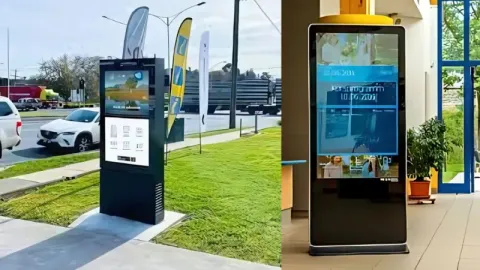
The right digital kiosk for you would be the one that has the hardware and software features that your visitors actually need.
Here are the critical ones to prioritize:
- Weatherproof & Rugged Hardware
Public park kiosks need to perform in extreme outdoor conditions. You must choose a Kiosk that has;
- Sealed enclosures that prevent dust, rain, and insects from entering.
- Internal cooling and heating systems to maintain stable performance year-round.
- Vandal-resistant glass and tamper-proof components that reduce repair frequency and downtime.
Installations near trails or parking lots face more abuse, so ruggedness protects long-term ROI.
- High-brightness, Sunlight-Readable Screens
The screen is one of the most crucial hardware of a kiosk. If visitors can’t read the screen, your kiosk is useless. So look for:
- Look for a minimum of 1,500 nits brightness for direct sunlight.
- Anti-glare coatings that improve screen visibility without affecting touch accuracy.
- Optically bonded screens that prevent moisture buildup and improve durability.
The screens must stay readable under the midday sun if you need to place the kiosk in open areas.
Interactive Software & Real-Time Content Updates
Kiosks should be as easy to update as they are to use. The best digital kiosk has:
- A user-friendly touch interface that helps visitors find what they need fast.
- CMS integration lets admins push updates across locations remotely.
- Advanced options including voice control or AR overlays for layered guidance.
Software should allow quick edits without on-site tech support.
Accessibility and ADA Compliance
Meeting ADA requirements expands reach and reduces legal risk. The best digital kiosk has:
- Multi-language selection to help non-English speakers.
- Built-in audio guide systems to support users with visual impairments.
- Screens that are positioned for both standing and seated users.
Accessibility is integral in a digital kiosk as it improves both compliance and user satisfaction.
How Outdoor Digital Kiosks Enhance Park Experiences

Well-placed digital kiosks solve real operational problems.
Here’s how they improve both visitor satisfaction and park management outcomes.
They Make Navigation Simple
Large parks often frustrate first-time visitors. Digital kiosks provide interactive maps that guide people from parking lots to trails, restrooms, or picnic areas.
Wayfinding becomes intuitive with search functions, route previews, and estimated walking times.
This reduces staff interruptions and improves visitor flow.
They Provide Real-Time Information
Static signage can’t keep up with changing park conditions. Kiosks push out timely updates such as weather alerts, trail closures, or fire risk warnings.
You can also share recent wildlife sightings to boost engagement. In an emergency, a digital kiosk becomes a reliable broadcast point for mass communication.
They Engage Visitors Through Interactive Learning
Modern kiosks aren’t just for directions—they help visitors learn, too. People can tap through screens to discover local plants, animals, or the history of the park using pictures, sounds, and simple prompts.
Some kiosks even offer virtual tours or seasonal guides, giving visitors more to explore—without needing paper brochures or extra staff to explain things.
They Offer Sustainable, Cost-Effective Communication
Digital kiosks cut long-term costs. Software updates eliminate the need to reprint maps, flyers, or signs. One system can support seasonal messaging, community events, and rule changes. Over time, kiosks reduce paper use, staff workload, and miscommunication across park zones.
Best Practices for Installing Outdoor Digital Kiosks
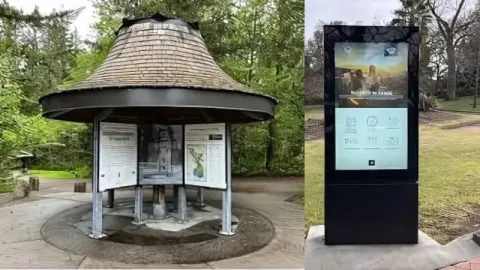
You need to install your digital kiosk in the park strategically. Placement, power, and long-term support determine the success or failure of your system.
Choose Locations That Maximize Visibility and Utility
Install kiosks where people pause or need directions. High-impact spots include park entrances, trailheads, parking zones, and restrooms or visitor centers. These areas naturally attract foot traffic and give users time to engage with the content.
Avoid isolated or low-traffic spots unless they serve a clear informational need.
Plan for Reliable Power and Network Connectivity
Not all sites will have grid access. Consider solar-powered options or nearby power infrastructure when planning installation. For connectivity, weigh your options:
- Wi-Fi works well near buildings or if you’ve invested in a park-wide network.
- 4G/LTE is useful for remote areas but needs strong signal coverage.
- Some kiosks offer offline functionality and batch data syncing for low-connectivity environments.
A hybrid setup may deliver the most flexibility across zones.
Prepare for Ongoing Maintenance and Technical Support
Kiosks need regular upkeep. Choose hardware built for outdoor exposure…look for sealed enclosures, heat dissipation features, and replaceable components.
On the software side, ensure that your vendor provides ongoing updates and remote diagnostics. This will reduce downtime and ensure that your system evolves with park needs.
Budgeting → Cost and ROI of Outdoor Digital Kiosks
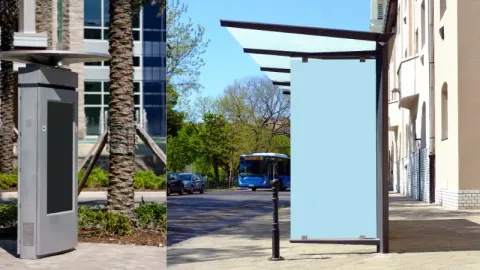
When you understand the complete financial picture, you don’t get budget surprises and quickly secure stakeholder approval.
Here’s what to account for:
Initial Investment Breakdown
Most outdoor digital kiosks cost between $7,000 and $20,000 per unit. Your final cost depends on:
- Hardware: Weather-rated enclosures, high-brightness screens, embedded PC
- Software: Content management systems (CMS), integration with third-party tools
- Installation: Mounting structure, site prep, labor
- Power and Connectivity Setup: Cabling, solar panels (if off-grid), 4G/Wi-Fi routers
Larger parks or those with multiple access points may need several units, multiplying costs.
Long-Term ROI Adds Up
Digital kiosks reduce ongoing operating costs. You can replace printed maps, brochures, and static boards with real-time updates.
Staff won’t need to handle common inquiries like directions or hours, freeing them for higher-value tasks.
Some parks also generate revenue through ad placement or sponsored content.
Total Cost of Ownership Varies by Use Case
Key variables include park size, number of visitors, and local weather. High-traffic locations may require more frequent servicing.
Parks in extreme climates need more rugged hardware and tighter maintenance cycles. Software licensing and support contracts also factor into multi-year costs.
Proper planning prevents unexpected overruns…and builds a stronger case for future expansion.
Some Real-World Implementations of Outdoor Digital Kiosks Boosting Park Engagement and Revenue

Golden Gate Park (San Francisco) → More Visitors, Less Paper, Better ROI
San Francisco’s Golden Gate Park has integrated digital kiosks to guide visitors through events, maps, and park services.
An article published by the SF Chronicle shows that these kiosks have reduced reliance on printed materials and cut staffing needs for visitor inquiries. City officials are also evaluating paid parking kiosks within the park to address budget gaps, signaling a growing shift toward revenue-generating infrastructure.
Taiwan’s Smart Tourism Parks → A Scalable Model for Urban Planning
Taiwan’s smart tourism hubs offer a successful model for urban and regional park planners. These hubs combine digital kiosks, QR codes, and interactive maps to deliver real-time assistance to visitors.
According to Digital Marketing for Asia, parks using this approach have reported increased engagement, especially from international tourists.
U.S. National Parks: Centralized Data with Interactive Map Kiosks
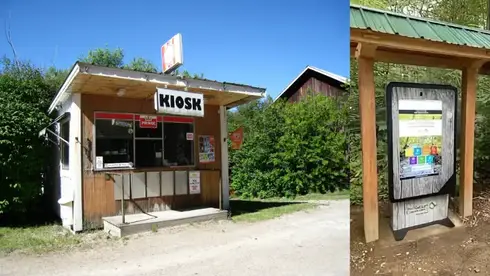
The U.S. National Park Service uses interactive map kiosks in major parks like Yellowstone and the Grand Canyon. These kiosks show real-time trail conditions, accessibility updates, and seasonal alerts. Staff manage all content through a centralized system.
The National Park Service reports that digital maps improve visitor experiences. Visitors can access maps offline and avoid confusion on extensive trails. They find it easier to navigate and stay informed.
Yellowstone Explored also shows how interactive maps help with trip planning. Visitors can find hidden spots and view key park details. This makes their time in the park smoother and more productive.
Eco-Parks and Botanical Gardens: Education That Stays Updated
Cities like Denver and Singapore use digital kiosks in their public gardens and eco-parks to support learning. The Denver Botanic Gardens placed interactive kiosks inside its Science Pyramid. Visitors can explore local plants, sustainability efforts, and biodiversity through digital displays. The kiosks show real-time info on seasonal exhibits, guided tour videos, and audio in multiple languages. Visitors get precise and current details every time.
Singapore’s National Parks Board (NParks) also applies this approach to green spaces. Digital kiosks and mobile tools give updates on conservation, tree health, and eco-friendly landscaping. These solutions help Singapore grow as a city where nature and urban life work together.
China’s Growing Market: A Look at Future Trends
China’s market for outdoor interactive kiosks is growing fast—from $11 billion in 2024 to an expected $21.26 billion by 2032, according to ClickRise Market Research.
More and more city parks are using these kiosks to manage visitors and share stories about local history and nature. It shows that kiosks are becoming a key part of smart city planning—not just helpful tools, but long-term assets for public spaces.
The Future of Outdoor Digital Kiosks in Parks

Talk to a Kiosk: AI and Voice Assistance
New kiosks are getting smarter. With built-in voice assistants, visitors can simply talk to get directions or park info—no screen tapping needed.
This is especially helpful for people with visual impairments. Plus, with AI, kiosks can even give personalized tips based on what you’re interested in.
Augmented Reality (AR) for Nature Education
Some parks are now using AR (augmented reality) to bring nature and history to life.
For example, California State Parks launched an app that shows cool facts about animals, plants, and landmarks when you point your phone at them.
It’s a fun way to learn and explore—no textbook needed.
Centralized City-Wide Kiosk Networks
Cities deploy interconnected kiosk networks to provide consistent information across multiple public spaces.
For example, New York City’s LinkNYC initiative has installed over 10,000 smart kiosks offering free Wi-Fi, local directions, and emergency alerts. These networks facilitate real-time data sharing and centralized content management, streamlining operations and maintenance.
Conclusion
Digital kiosks are no longer just a “nice-to-have.” They’re turning underused spaces into high-engagement zones.
The right digital kiosk gives park operators more control, more data, and better visitor outcomes. Parks that invest in kiosk systems are seeing measurable ROI: more extended visits, increased event turnout, and stronger partnerships with local businesses.
If your park still relies on static signage, you’re missing real opportunities. Kiosks drive decisions, guide movement, and influence how visitors spend their time and money.
Don’t wait until your competitors modernize first.
Ready to Bring Digital Kiosks to Your Park?
Explore Swiftforce Digital Kiosks and discover how to make your park more innovative, efficient, and revenue-ready. Get a free quote now if you’re ready to implement an outdoor kiosk in your park.