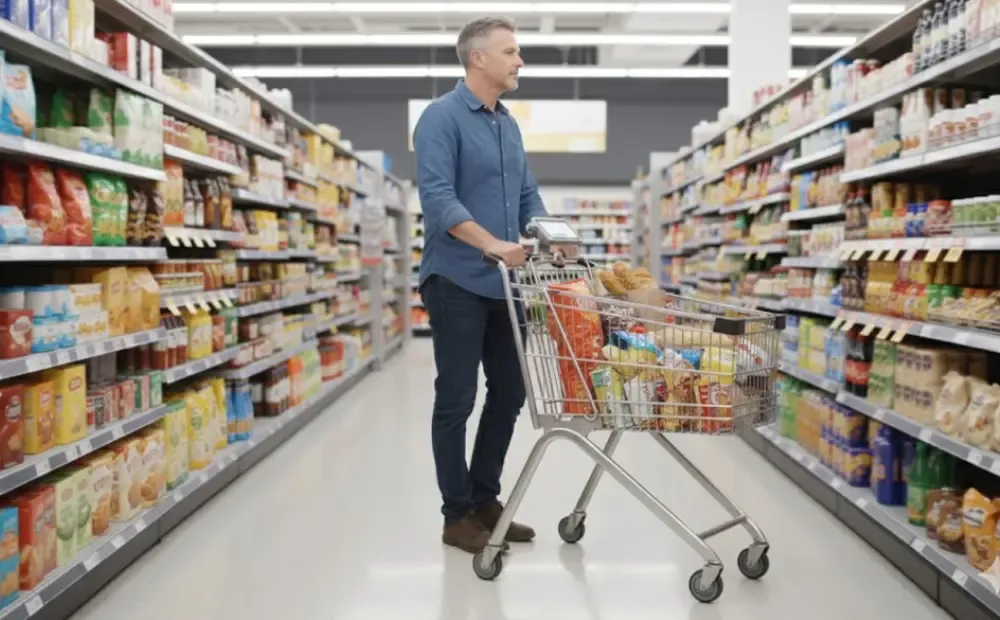
Checkout breaks the supermarket experience. Your store can run well all day, yet lose trust in the last five minutes. Long lines slow traffic. Shoppers move fast through aisles. Then they stop. Lines form, and their patience fades. Basket size shrinks. Some customers walk away.
Self-checkout helped reduce labor. It also added new problems. Mis-scans rise. Staff still monitor lanes. Queues remain during peak hours.
Supermarkets do not need faster checkout. They need a checkout to disappear. That gap explains the rise of AI-powered smart shopping carts for supermarkets. These smart carts in supermarkets shift checkout into the shopping trip itself.
What Are AI-Powered Smart Shopping Carts?
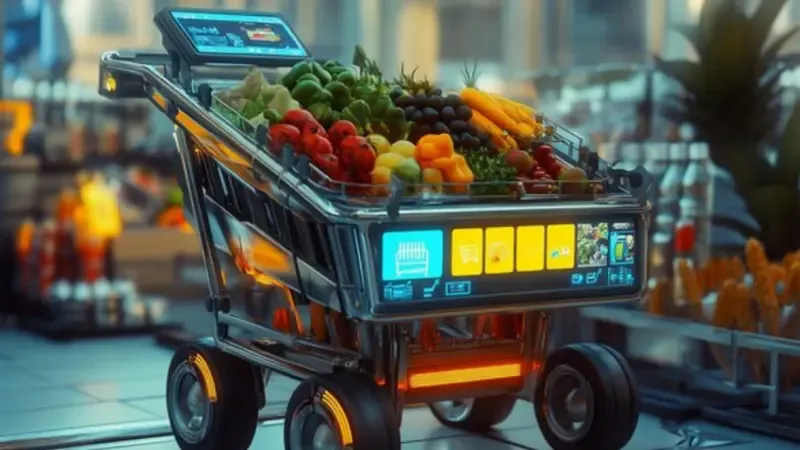
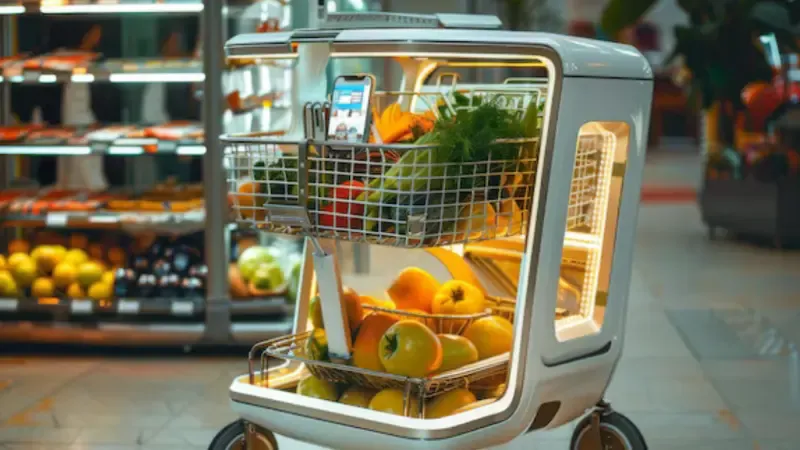
AI-powered smart shopping carts track items as customers shop. The cart detects each product placed inside it. It updates the basket in real time. Prices appear instantly on the cart screen.
The intelligence lives inside the cart. The store does not rely on ceiling cameras or full store automation. Each cart works on its own.
For supermarkets, this means that checkout occurs during the shopping process. Not at the exit.
How Smart Carts Differ From Traditional Carts and Scanners
Traditional carts do nothing. Hand scanners depend on customer action. Both push checkout to the end of the trip.
Smart carts remove that step. The cart identifies items without manual scans. It builds the basket automatically.
For operators, this reduces queues, scan errors, and peak-hour stress. AI-powered smart carts transform the checkout experience. This shift defines modern smart cart technology in supermarkets.
Core Components Inside a Smart Cart
Smart carts use a focused set of tools built for grocery stores.
- Cameras and weight sensors
These detect when items enter or leave the cart. They confirm product type and count. This limits missed items. - On-cart screen
The screen shows the live basket. Shoppers see prices, totals, and item lists as they shop. - AI vision models
These recognize packaged goods and fresh items. Accuracy improves across large product catalogs. - POS and payment integration
The cart connects with existing checkout and POS systems. Stores keep their current setup. - Security and loss control logic
The cart flags mismatches and unusual actions. This supports shrink control without added staff.
How Smart Cart Technology Works Inside a Supermarket
Smart carts work inside real grocery stores. They fit into daily operations without major layout changes. This section explains what happens from item pickup to store exit.
Product Recognition and Real-Time Basket Building
When a shopper places an item in the cart, the cart detects it instantly. Cameras and weight sensors confirm what entered the cart. The system updates the basket at once.
Each item links to a specific SKU. The cart recognizes packaged goods, branded items, and store-label products.
Fresh produce follows the same flow. The cart detects the item type and weight. It applies the correct price automatically. No manual input is needed.
Prices and promotions update in real time. Discounts apply as items enter the cart. Shoppers always see an accurate total. This is the core of smart cart technology in grocery environments.
Continuous Checkout vs Traditional Checkout
Traditional checkout waits until the end of the trip. Smart carts do not.
Checkout happens while the shopper moves through the store. The cart builds the bill item by item. There is no scan step at the exit.
Because checkout finishes before the shopper reaches the front, queues no longer control the flow. This enables smart cart checkout and free shopping during peak hours.
Payment and Exit Flow
Payment happens after the shop, not during checkout. Shoppers confirm the total on the cart screen. They pay through a connected payment method.
In stores with exit controls, the cart syncs at the door. Verification takes seconds.
This flow removes end-of-trip delays. Stores avoid new checkout lanes or store redesign. Bottlenecks shrink without added floor space.
Smart Carts in Supermarkets: How the Shopping Journey Changes
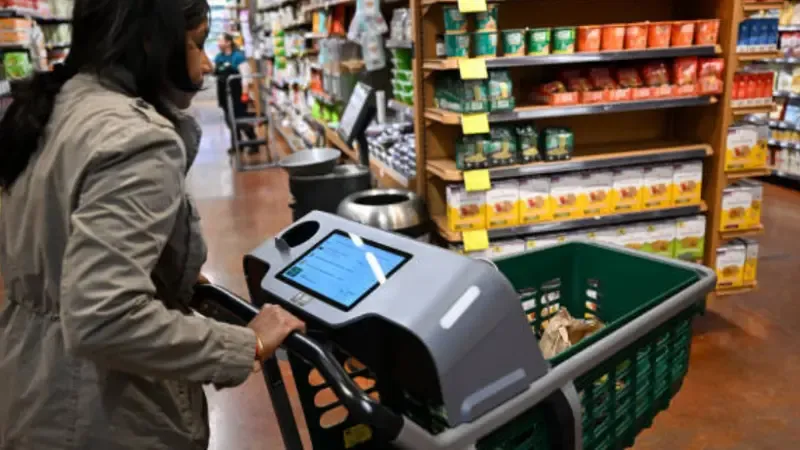
Smart carts change how shoppers move through the store.
They remove waiting and reduce friction. The result is a smoother trip for customers and staff.
Step-by-Step Customer Journey
Step 1: Cart Pickup and Trip Start
The shopper picks up a smart cart at the entrance. The cart activates at the start of the trip. No scanning setup is required. The shopper starts shopping right away.
Step 2: Product Selection and Live Basket Tracking
As items go into the cart, the cart tracks them instantly. The screen shows each product, its price, and the running total. The shopper stays in control of spending. Fresh items and packaged goods follow the same flow.
Step 3: Payment and Store Exit
When shopping ends, the shopper reviews the basket on the cart screen. Payment completes without joining a queue. The shopper exits the store without stopping at a checkout lane. This is how smart carts in supermarkets remove end-of-trip delays.
Impact on Store Flow and Floor Operations
Smart carts reduce checkout choke points. Shoppers no longer cluster at the front of the store.
Aisles stay clearer during busy hours. Staff spend less time managing queues. They focus on customer support instead.
Peak periods become easier to manage. Stores move more shoppers without adding lanes or staff. This supports cashierless shopping without changing the store layout.
AI Shopping Cart vs Self-Checkout: A Supermarket-Specific Comparison
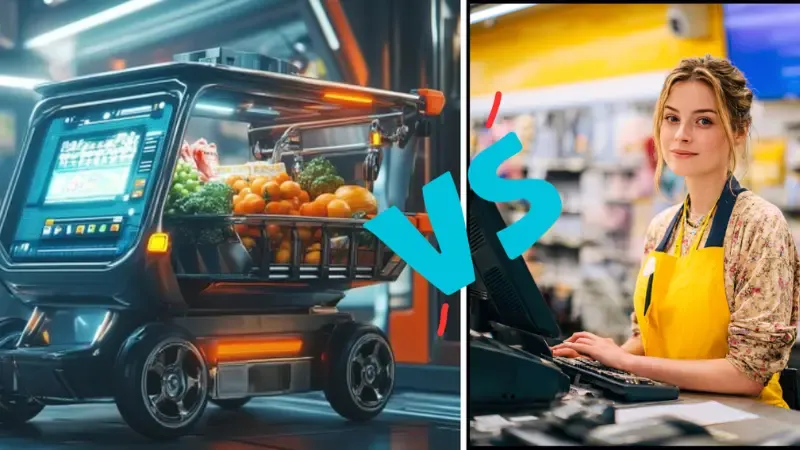
Supermarkets face real trade-offs when choosing between AI shopping carts and self-checkout. This section compares them from an operational perspective. It focuses on speed, labor, error reduction, and customer experience.
Operational Differences That Matter to Supermarkets
End-of-trip scanning vs continuous checkout: Self-checkout scans items at the end of the trip. AI shopping carts scan continuously. Shoppers never wait to finish scanning.
Error handling and mis-scans: Self-checkout often needs staff to correct mis-scans. Smart carts detect items automatically and reduce errors.
Customer intervention rates: Self-checkout requires shoppers to actively scan and bag items. Smart carts work mostly without intervention, letting shoppers focus on picking products.
Labor, Supervision, and Shrinkage
- Staffing requirements
Self-checkout requires staff to monitor several lanes. AI smart carts reduce the number of staff needed for checkout supervision.
- Loss prevention implications
Self-checkout can increase shrinkage if customers bypass scanning. Smart carts track each item in real time, improving accuracy and reducing loss.
- Supervisor load per transaction
With self-checkout, supervisors handle multiple problem transactions. Smart carts reduce these issues, lowering oversight demand during peak hours.
Comparison Table: AI Shopping Cart vs Self-Checkout
| Feature | AI Shopping Cart | Self-Checkout |
|---|---|---|
| Transaction Speed | Continuous checkout as items are added | End-of-trip scanning, can cause delays |
| Queue Dependency | Minimal, no line required | Dependent on lane availability |
| Staff Oversight | Low, occasional support | Moderate to high, constant supervision |
| Shrink Risk | Low, automatic tracking | Higher potential mis-scans or skipped items |
| Customer Friction | Low, smooth shopping experience | Moderate, requires scanning and bagging |
| Scalability During Peak Hours | High, carts handle traffic naturally | Limited, bottlenecks form in lanes |
Benefits of Smart Carts in Supermarkets (Operational, Not Theoretical)
Smart carts deliver real results for supermarkets. They improve throughput, shopping experience, and data insights. This section explains how these benefits show up in real operations.
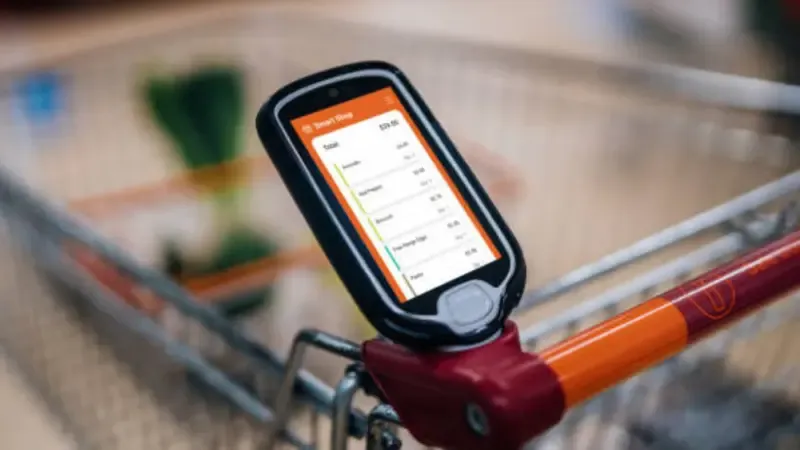
Faster Throughput Without Expanding Checkout Space
Smart carts help stores move more shoppers without adding lanes or staff. A supermarket simulation study found that smart cart systems cut average checkout time by over 90% compared to traditional checkout lines.
During peak hours, smart carts keep customers moving. This reduces congestion at the front of the store. Seasonal spikes, like holidays or weekends, become easier to manage. A recent market report found that many supermarkets using smart carts saw queue times drop by as much as 35%.
Better Customer Experience That Increases Basket Size
Smart carts give shoppers a live view of their basket total. This helps them stay aware of spending as they shop.
Many retailers report that smart cart deployment correlates with higher customer satisfaction. A market survey noted that 58% of shoppers prefer smart carts to reduce checkout time, and 49% of supermarkets saw an increase in average basket size after adopting them.
This combo of speed and visibility reduces anxiety at checkout and encourages higher spend per visit.
Lower Error Rates and Better Pricing Accuracy
Smart cart systems scan and detect items automatically as they are placed in the cart. Research on smart shopping systems shows that automatic item detection can sharply reduce average shopping and checkout times, indicating fewer interruptions for error correction.
Automatic pricing validation ensures the right price is applied each time. This also reduces disputes at checkout and builds shopper trust over time.
Actionable In-Store Data for Operators
Smart carts are not just checkout tools. They generate usage data throughout the trip. Operators can use this data to analyze:
- Path-to-purchase patterns – which aisles are most trafficked and when
- Product interaction insights – which items draw attention before purchase
- Promotion effectiveness – which offers lead to conversions in real time
According to industry research, smart carts act as mobile data collectors that help supermarkets make smarter inventory and promotion decisions.
How AI Smart Carts Enable Cashierless Shopping (Without Rebuilding the Store)
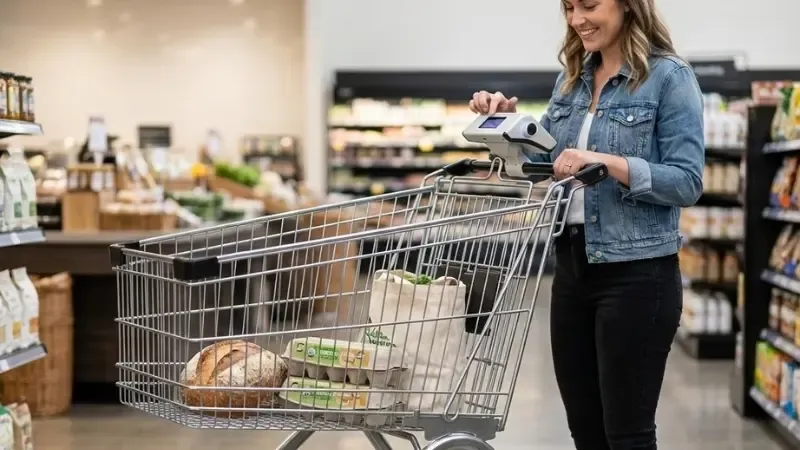
Cashierless shopping no longer requires a full store rebuild.
Smart carts remove checkout friction without changing store layouts. This makes adoption faster and lower risk.
Smart Carts vs Fully Cashierless Stores
Fully cashierless stores rely on heavy infrastructure:
- Ceiling cameras across the entire store
- Sensors on shelves and fixtures
- Central systems that track every shopper’s movement
These setups take time to install. Costs run high. Many existing supermarkets cannot support this model.
Smart carts work differently:
- Intelligence sits inside the cart
- No ceiling cameras are required
- No shelf or layout changes are needed
This lowers rollout complexity and cost. Store size and format matter less. This makes smart carts a practical path to cashierless shopping.
Why Smart Carts Scale Better for Supermarkets
Smart carts support gradual deployment. Stores can start small and expand over time. This reduces risk and disruption.
No ceiling cameras are needed. Existing lighting and layouts stay intact. Stores remain open during setup.
Smart carts also connect with current checkout and payment systems. This flexibility explains why many AI retail solutions now focus on cart-based models.
Hybrid Checkout Models in Real Supermarkets
Most supermarkets adopt hybrid checkout setups:
- Smart carts alongside staffed lanes
- Smart carts with limited self-checkout stations
This approach supports all shopper types. Stores move toward cashierless shopping without forcing a full switch. Hybrid models offer control, flexibility, and smoother adoption.
Why Supermarket Operators Are Investing in AI Retail Solutions Now
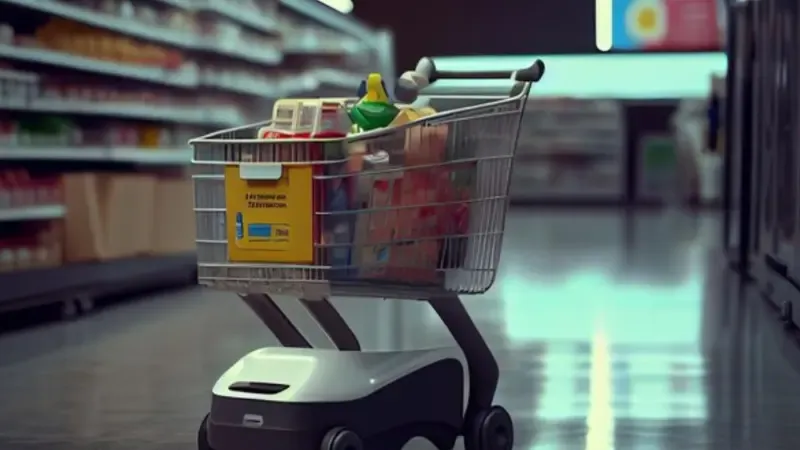
Supermarkets face pressure from every side. Costs rise. Margins stay tight. Shoppers expect faster trips. AI smart carts offer a practical response. They address daily store economics, not future trends.
Labor Pressure and Cost Control
Labor remains one of the largest store expenses. It also stays hard to manage.
Smart carts help in three direct ways:
- Lower checkout staffing needs: Fewer staff are required to monitor lanes. One associate can support many carts.
- Better use of existing staff: Staff shift from queue control to customer support and floor tasks.
- Reduced peak-hour overtime: Continuous checkout smooths traffic. Stores rely less on extra labor during rush periods.
These gains improve cost control without cutting service quality. This is why operators view smart carts as practical AI retail solutions, not experiments.
Changing Shopper Expectations
Shoppers expect speed and clarity. They do not tolerate waiting.
Smart carts meet these expectations by design:
- Shoppers see totals as they shop
- Checkout does not interrupt the trip
- Exit feels fast and predictable
This reduces frustration at the most sensitive moment of the visit. When checkout improves, satisfaction improves. That protects repeat visits and basket value.
Competitive Differentiation at the Store Level
Supermarkets compete store by store. Small advantages matter.
Smart carts help stores stand out:
- Faster trips without layout changes
- Modern experience without full automation
- Visible improvement that shoppers notice immediately
These factors support retention in crowded markets. Operators invest now because the impact shows quickly. The return does not depend on future behavior. It shows up in daily operations.
Frequently Asked Questions About AI-Powered Smart Carts
What is an AI-powered smart shopping cart?
An AI-powered smart shopping cart tracks items as customers shop. It detects products placed inside the cart and builds the basket in real time. Checkout happens during the trip, not at the end.
Do smart carts replace self-checkout machines?
Smart carts do not fully replace self-checkout in most stores. They reduce reliance on it. Many supermarkets use smart carts alongside limited self-checkout to handle different shopper needs and traffic patterns.
Are smart carts suitable for large supermarkets?
Yes. Smart carts work well in large supermarkets with wide product ranges. Each cart operates on its own. Store size does not limit performance. This makes them suitable for high-traffic and multi-aisle formats.
How do smart carts handle fresh produce and weighted items?
Smart carts detect fresh items using cameras and weight sensors. The system identifies the item type and applies the correct price based on weight. Shoppers do not need to scan or enter codes manually.
Is cashierless shopping possible without changing the store layout?
Yes. Smart carts enable cashierless shopping without store redesign. They do not require ceiling cameras or shelf sensors. Stores keep existing layouts, lanes, and systems while reducing checkout friction.
Final Take: Practical Change With Daily Impact
Smart carts solve a clear problem. Checkout slows stores down. They do not promise a futuristic store. They deliver smoother flow, fewer errors, and faster exits today.
This is an operational upgrade, not an experiment. Smart carts integrate with existing store layouts, POS systems, and staffing models without forcing disruptive redesigns. Retailers can roll them out gradually, measure results, and scale at a pace that matches operational readiness.
For supermarket leaders, the question is timing, not theory. Early movers gain efficiency and customer satisfaction advantages that compound over time.
Ready to assess real-world fit and deployment options?
If you’re exploring practical ways to improve checkout efficiency, start by reviewing how smart carts fit into your current POS ecosystem.If you want to assess fit, contact Swiforce and review which POS options align with your store goals.