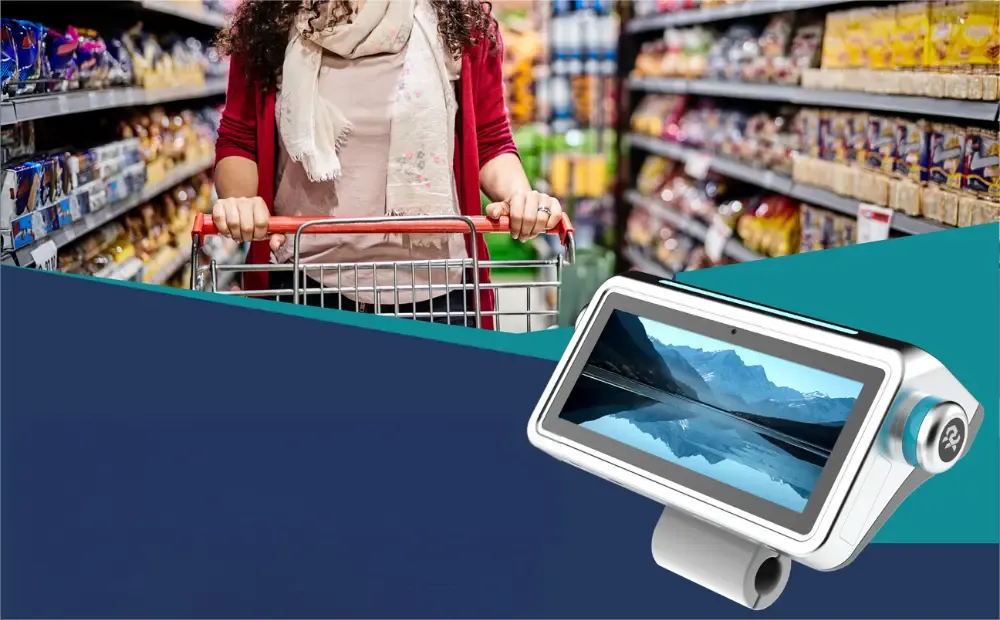
You watch carts stack up near the self-checkout. Carts pile up near the self-checkout. You add more kiosks, but lines still form. The problem isn’t the number of machines. It’s how people move through the store. Customers want fast exits, not extra touchpoints. Labor teams struggle to check stations and prevent theft. Shrink losses creep up. AI smart carts serve as a new system for mobile checkout and on-cart scanning.
They also provide direct POS sync and built-in payment capabilities. They turn movement into throughput. They reduce choke points without adding staff. Keep reading to see how AI carts work and how retailers assess suppliers.
What Is an AI Smart Cart?
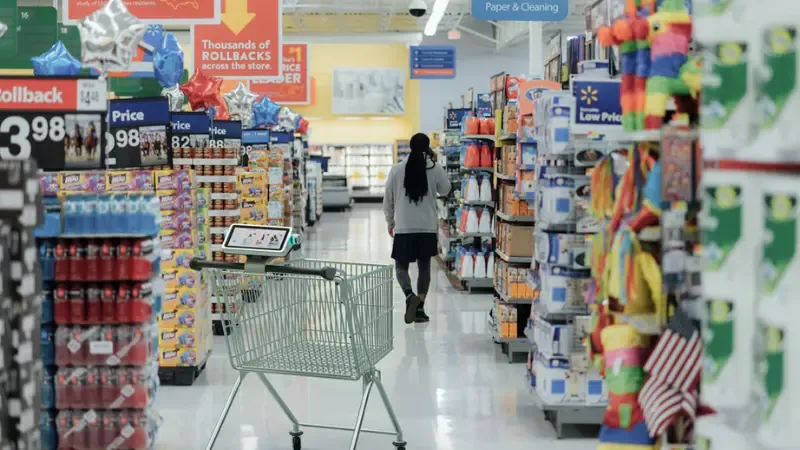
An AI smart cart is a connected edge device. It identifies products, updates billing, and processes payment in real time. It replaces barcode scanning with cameras that recognize items and weigh them. It builds a live virtual basket as the shopper moves, adds products, or removes items.
Hardware Stack
- AI cameras capture each product from many angles.
- Weight sensors confirm item placement and detect mismatches.
- An edge compute module runs inference without cloud delay.
- A high-capacity battery powers the system through store hours.
Software & Integration Layer
- SKU recognition models classify products automatically.
- A POS integration node syncs prices, discounts, and loyalty IDs.
- Payment modules support tap, wallet, or app-linked checkout.
- IoT connectivity sends transaction data and performance logs.
An AI cart works as a mobile checkout, item scanner, and payment device. It fits inside a standard shopping cart.
Inside the Technology: How AI Smart Carts Actually Work

AI smart carts track inventory and complete checkout using built-in hardware and software. Each cart acts as a mobile POS, recognition engine, and data node.
Understanding the technical components helps retailers evaluate solution providers and strategically plan deployment.
Vision AI + SKU Recognition
AI cameras continuously capture every item placed in the cart. The system identifies each product. It can tell different versions of items and changes in packaging. Customers don’t need a barcode for checkout. Barcodes often slow scanning or cause wrong charges.
Detection happens in milliseconds. It works even with many items at once. The basket updates in real time. This keeps pricing accurate and prevents disputes.
Weight Sensors + Redundant Validation
Weight sensors verify that the physical item matches the SKU detected by the AI cameras. This dual validation prevents misreads and reduces shrinkage. The system automatically detects billing issues.
It sends alerts to staff when needed. This extra check builds trust in the checkout. It also keeps billing accurate without manual work.
Edge Computing + On-Cart Inference

The edge compute module allows the cart to process all AI and sensor data. It does not rely on constant cloud connectivity.
Key capabilities include:
- Real-time processing of camera and weight sensor data to detect products immediately
- Millisecond-level feedback to the user interface for accurate virtual basket updates
- Offline operation if the store Wi-Fi fails, maintaining uninterrupted checkout
- Simultaneous handling of payment, loyalty recognition, and analytics telemetry
The cart processes data on-device. Edge computing speeds up detection and improves accuracy. Checkout stays fast even if Wi-Fi drops.
POS, ERP & Loyalty System Integration
AI smart carts integrate with POS and ERP systems. It recognizes loyalty IDs in real time to apply discounts and personalized offers. SKU prices and promotions sync to prevent billing errors.
The system tracks how shoppers move, how long they spend in each area, and what they put in their carts. This information helps stores improve operations and increase sales.
Vision AI, combined with weight checks, increases reliability. Edge computing keeps speed high and errors low. Strong system integration supports scale and smooth rollout. Together, these features outperform traditional checkout systems. Understanding these technical engines allows retailers to compare smart cart hardware providers.
ROI & Business Impact: The Metrics Retail Executives Actually Care About
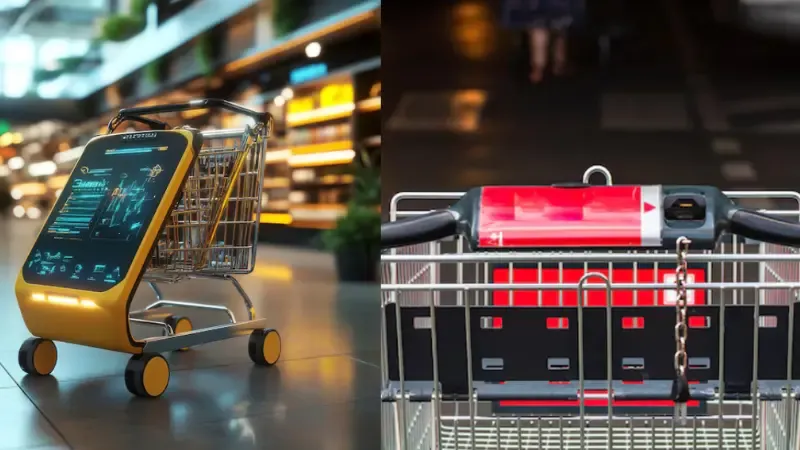
Retail leaders judge technology by real results. AI smart carts increase checkout speed, average basket size, and staff efficiency.
This matters to supermarket P&Ls and operations.
- Queue Elimination → Higher Throughput
Retail checkout lanes and self-checkout kiosks often create bottlenecks. AI smart carts move checkout to the cart itself. They remove fixed-lane limits. Waiting shoppers become active transactions immediately. Studies show automated checkout recognizes products more accurately. It also reduces scanning mistakes compared to older systems.
For high-footfall chains, that uplift can translate into higher daily sales volume.
- AOV Boost Through Smart Recommendations
AI smart carts can increase AOV. They show smart suggestions in real time as customers shop. Retail trials and analysis of frictionless checkout systems report clear gains:
- A smart-cart chain saw a 30% rise in basket size.
- Research shows shoppers add more when items appear as a bundle. Related products shown together increase add-ons and total spend. Smooth, convenient UX pushes 65% of shoppers to buy more.
The uplift comes from smart prompts and real-time recommendations. Reduced friction at checkout also drives larger basket totals. Over time, higher baskets improve margins per transaction. For supermarkets, even small AOV gains scale across thousands daily.
- Shrink & Error Reduction
Shrink from theft and mis-scans is still a major issue. Traditional and self-checkout systems struggle with this problem. AI smart carts confirm items with vision and weight sensors. They track baskets in real time for accurate billing. This reduces mis-scans, theft, and accidental undercharging.
Automated checkout research shows higher product recognition accuracy. It also reduces manual scanning errors compared to legacy systems.
Moreover, digital receipts tied to cart checkout help reduce disputes over mismatched billing. It addresses a common complaint in manual checkout lanes. These factors together lower shrinkage and error-related losses.
- Labor Productivity & Workforce Redeployment
With AI carts handling scanning and payment, staff at checkout become less essential. That reduces demand for cashiers. This frees staff for service, stocking, or merchandising support.
Large retailers using AI carts reduced cashier staffing by 33%. These gains come straight from automated checkout operations. This frees up staff during busy times. Moving staff to help customers improves experience and builds loyalty.
Caveats & What Data You’ll Need from Vendors
- Most data comes from early deployments, not large AI-cart rollouts.
- Retailers should request vendor-specific data for accurate ROI projections.
- Ask for detection accuracy, uptime, basket uplift, shrink reduction, and throughput metrics.
Real ROI depends on store layout, SKU mix, customer behavior, and integration quality.
Use Cases: Where Smart Carts Deliver Maximum ROI
AI smart carts do not perform equally well across all retail environments. Their impact grows when SKU mix, traffic, and basket size stress old checkouts. Below are the retail formats where ROI compounds fastest when using a smart cart.
Grocery Chains
In grocery chains, product variety changes weekly. Produce, bakery, and private-label items challenge systems that rely only on barcodes. Cameras reduce scanning problems and handle items without tags. Smart carts track product swaps, helping stores keep shelves stocked correctly.
Hypermarkets
In hypermarkets, shoppers cover a large floor space and add items. A mobile checkout system keeps them moving instead of queuing at static lanes. Real-time basket visibility nudges premium SKUs, seasonal combos, or category expansions.
Urban convenience
Urban convenience formats depend on speed. High-frequency shoppers want in-and-out trips during lunch breaks or commuting hours.
Smart carts remove checkout wait completely. Even a one-minute reduction per trip compounds across thousands of daily transactions.
Warehouse and wholesale stores
In warehouses and wholesale stores, basket size is the primary driver of revenue. Smart carts surface bulk-item add-ons, membership-linked deals, and multi-unit incentives.
The more items a shopper has, the more smart carts increase value via upsells and fewer mis-scans.
Format Snapshot
| Retail Format | Value of Smart Carts |
|---|---|
| Grocery Chains | High SKU volume and weight-based items need recognition accuracy |
| Hypermarkets | Faster aisle movement expands basket opportunity |
| Urban Convenience | Removing queues lets quick-trip shoppers finish faster |
| Warehouse Stores | Larger baskets amplify upsell and margin-mix gains |
Frictionless Checkout: Smart Carts as the Next Stage of Retail Checkout

Frictionless checkout removes the last step between choosing items and paying. Shoppers enter, pick items, add them to the cart, and walk out.
The payment processes are without a terminal, kiosk, or staffed lane. There is no pause, no scan, and no queue.
What Makes This Architecture Frictionless
Smart carts track inventory inside the basket in real time. Cameras register each product. Weight modules confirm placement or removal.
The system updates the bill immediately, so the shopper always sees their total. No barcode lookup. No manual confirmation screens. No scanning at all.
Why It Extends Beyond Self-Checkout
Self-checkout still creates a fixed point in the store. During peak traffic, queues form. Kiosk count limits throughput. Smart carts remove that limit.
The checkout lives inside the cart. Customers complete payment while moving… not while waiting.
Mobility Gives Smart Carts Their Edge
A frictionless cart follows the shopper. It supports add, swap, or remove actions anywhere in the aisle. It handles mixed-SKU trips like produce, bakery, and packaged goods without slowing flow. This is mobility, not a static machine with a payment slot.
Smart carts enable accurate, frictionless checkout solutions. The store becomes the checkout lane, and the exit becomes the completion point. That shift is why retailers now treat AI carts as infrastructure.
Vendor Evaluation Framework: How to Choose a Smart Cart Solution Provider
A buying decision affects throughput, shrinkage, uptime, and customer trust. A smart cart is a store-wide system, not only a peripheral.
- AI Model Accuracy (Non-negotiable)
Accuracy ensures the cart totals the bill correctly. The system must recognize different product versions and packaging changes. Low accuracy creates manual override events and shopper distrust. Demand validation benchmarks, SKU library size, and update cycles during pilot.
- Battery Runtime & Uptime Availability
A dead cart halts a session and stops revenue. Look for fleets that last a full trading day without swap-outs.
Fleet dashboards must display charge levels and push charging alerts. Runtime is a core predictor of operational stability.
- Edge Compute Speed & On-Cart Processing
Edge inference controls object detection speed. Slow inference results in a lag when customers add products to their carts. Verify model latency, memory bandwidth, and fallback modes if Wi-Fi drops.
- Security, Compliance & Payment Certification
A provider must support encrypted transactions and meet PCI-DSS requirements. Also request audit logs, device-level encryption, and key rotation policies. Payment certification keeps frictionless checkout legally deployable.
- Scalability & Fleet Management Controls
Ten carts run as a demo. Three hundred change store economics. Select vendors offering OTA updates, SKU synchronization, usage analytics, and bulk maintenance tools. The real test is using many carts at once.
Qualities to Prioritize in a Smart Cart Supplier
The strongest smart cart solution providers ship:
- Industrial-grade hardware built for bumps, spills, and high-cycle use.
- Manufacturing capacity for multi-store rollout…not prototype delivery.
- Modular AI platforms with API extensibility for POS, ERP, loyalty, and promotion engines.
An innovative cart supplier should prove readiness, not promise it. Quality shows in uptime, accuracy, and fleet scalability.
Deployment Roadmap: How to Roll Out Smart Carts
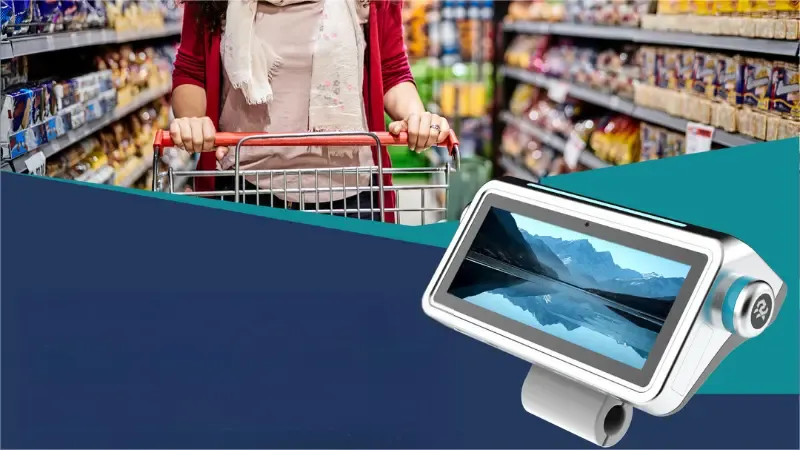
A smart cart rollout works best when it scales from pilot aisles to full stores.
Deployment requires clear structure, aligned data, and defined ownership. Here’s a step-by-step path retailers use to reduce disruption and maximize ROI.
- Store Mapping & SKU Dataset Preparation
Start by mapping aisles, lighting zones, and shelf layouts. Build a clean SKU dataset with weight, packaging variants, and price rules.
Outcome: high recognition accuracy from day one. Time: 3–6 weeks, depending on catalog size.
- POS, Loyalty & Pricing System Integration
API integration connects the cart to live price feeds, promotions, and membership IDs. Sync logic prevents price mismatch at checkout. Outcome: consistent billing and personalized offers. Time: 2–4 weeks for cloud-enabled POS.
- Pilot Area Launch + Feedback Loop
Deploy 20–50 carts in a single, high-traffic zone. Track dwell time, misread frequency, and AOV changes. Iterate model updates weekly.
Outcome: field-validated SKU accuracy and UX alignment. Time: 6–10 weeks.
- Staff Enablement & Customer Onboarding UX
Train floor staff to guide first-time shoppers. Use signage and QR walkthroughs to reduce hesitation.
Outcome: adoption curves rise faster when onboarding is active. Time: 2–3 weeks.
- Scale Rollout + Fleet Management Analytics
Expand across aisles, then locations. Use dashboards for battery health, throughput, and shrink alerts.
Outcome: stable performance at 200+ carts, multi-store visibility. Time: ongoing.
Smart carts scale best when you’re strategic and accountable.
What’s Next: AI Carts and the Evolution of the In-Store Digital Experience
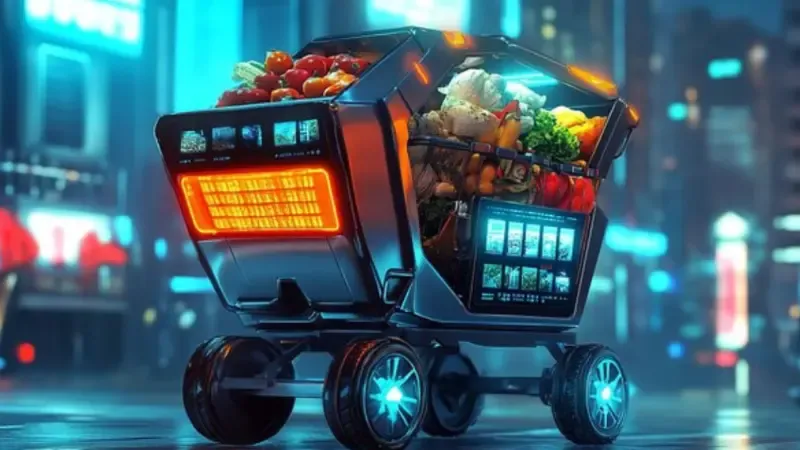
Smart carts move from recognition tools to complete digital commerce engines. The next generation will focus on more effective item detection, such as carts talking to shelves. The objective is to improve the shopper experience.
Self-Learning SKU Recognition Will Improve
Future carts refine recognition through active learning. Packaging updates, seasonal SKUs, and private-label variants train models faster.
Edge models become more resilient to lighting changes and stacked items. This shift strengthens reliability without manual dataset updates.
Cart-to-Shelf Communication Becomes a Standard Layer
Carts will connect to smart shelves to pick intent and surface micro-promotions. If an item returns to a shelf, the cart updates the basket.
Real-time feedback reduces error margin and supports frictionless restocking workflows.
Heatmap Intelligence Will Inform Merchandising Decisions
Carts track shoppers’ movement and where they stop. Stores adjust shelf layouts based on this information.
This creates evidence-driven merchandising instead of seasonal guesswork. Upsell placement, sampling zones, and promo displays gain clarity on ROI.
Super-App Integration Will Unify Customer Experience
AI carts absorb loyalty, coupons, delivery scheduling, and recipes into a single journey. A user starts in-store and continues online with saved preferences.
This merges the physical and the digital… one identity, one cart, one experience.
Final Take: The Advantage Goes to Operators Who Remove Friction
Winning retailers don’t optimize queues…they destroy them. AI-powered smart carts make that shift permanent and measurable across fleets.
This isn’t a future concept—it’s the new operational standard. Retailers who adopt early gain measurable efficiency, stronger customer satisfaction, and a clear competitive edge.
Start Your Smart Cart Transformation Today
Ready to explore what next-generation intelligent carts can do for your stores?
Visit our website to learn more about our smart retail hardware, or connect with our team for a guided deployment roadmap tailored to your business.
Let SwiftForce help you move toward a frictionless, AI-driven shopping experience.